
Article: Understanding Gemstone Certifications
Understanding Gemstone Certifications
When shopping for a gemstone, you may come across terms like certified, graded, or identified. This jargon can get confusing and we want to help you understand what it actually means.
At Staghead Designs, we offer both reported and non-reported gemstones to be set in unique engagement rings. Gemstone reports can provide helpful information about a stone's characteristics, but not every stone needs one or is able to receive one. With a focus on unique designs and unique stones, we value the visible qualities of gemstones and want each of our customers to find one that speaks to them.

What Is a Gemstone Certification?
“Certification” is a term commonly used in the jewelry industry, but gemological research organizations also use the words report, analysis, and grading to describe the process.
A laboratory report is a detailed record of a stone's characteristics as determined through gemological examination. It isn't an appraisal of what the stone is worth, nor does it guarantee its future value. Depending on the stone and the type of report, it can answer questions such as:
What are the stone's basic characteristics?
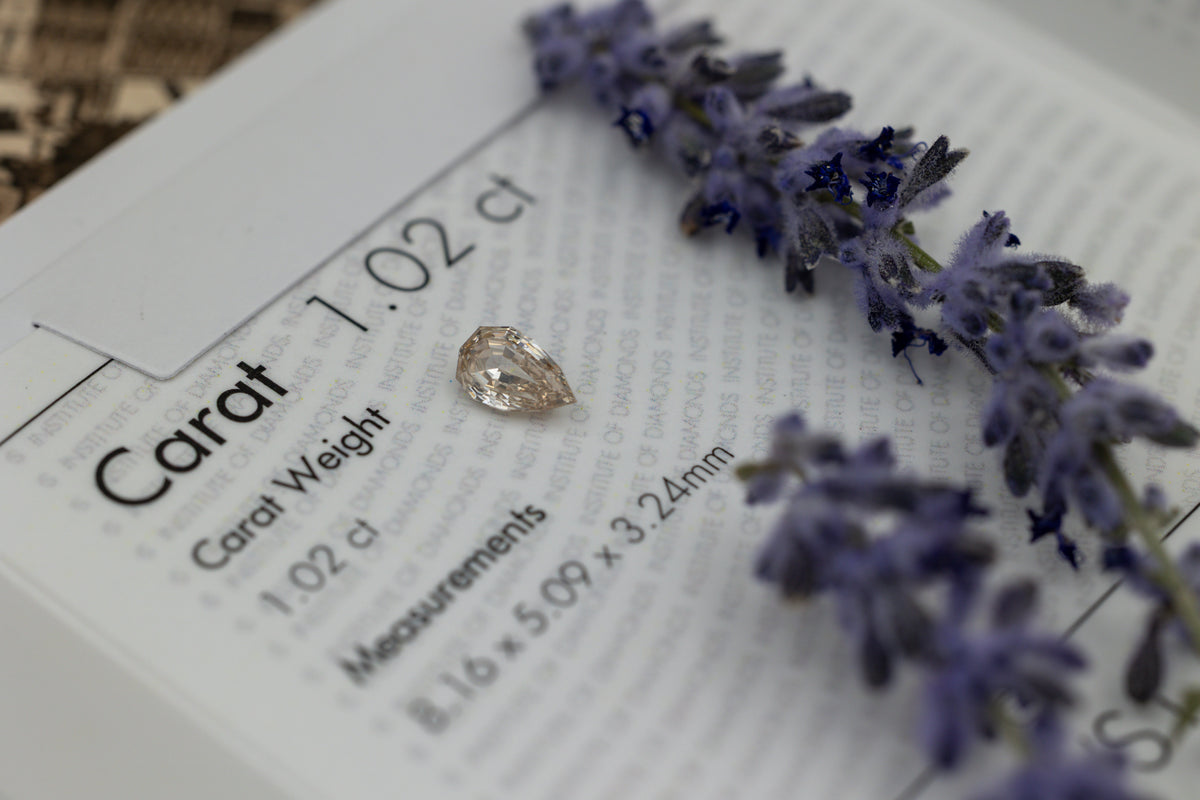
Reports can document details such as measurements, weight, shape, cutting style, color, and transparency.
What is this gemstone?
A laboratory can identify the gemstone's species and, depending on the material, its variety. With over 300 documented gemstones, there are countless possibilities beyond just stones that are commonly used in jewelry. A laboratory report can help identify exactly which gemstone species and variety you're looking at.
Is it natural or lab-grown?
Laboratories can perform testing to determine whether a gemstone is naturally occurring, laboratory-grown, or a simulant.
Has the gemstone been treated?
Many gemstones are routinely treated to enhance their color or clarity. A laboratory report can disclose treatments that were detected during examination.
Where did the gemstone come from?
For certain gemstones, laboratories may be able to provide an opinion on geographic origin. However, origin isn't always determinable, and an origin report may state that the result is inconclusive.
Where Do Gemstone Reports Come From?
Gemological laboratories use specialized equipment and trained gemologists to examine stones and document their characteristics. When shopping for your unique engagement ring, two laboratory names you may encounter are GIA and IGI.
GIA: Gemological Institute of America
The Gemological Institute of America is an independent, nonprofit organization known for its work in gemological research, education, and laboratory analysis. GIA examines both diamonds and colored gemstones.
GIA offers identification reports for colored gemstones, as well as origin reports for certain varieties of colored stones. A GIA colored stone report can include the gemstone's species, variety, cutting style, shape, weight, measurements, color, and detectable treatments.
IGI: International Gemological Institute
The International Gemological Institute (IGI) is another independent gemological laboratory that analyzes diamonds, colored gemstones, and jewelry.
IGI's colored stone reports identify a gemstone's species and variety, and may include an opinion on geographic origin. IGI also examines stones for natural, lab-grown, or simulant origin and notes permanent treatments in its reports.

Not Every Gemstone Needs a Report
There are several reasons a stone might be sold without a certification. One reason is that laboratory examination is an additional service with costs that vary according to the gemstone and its weight. It's also important to note that this process can take more time, which may not be ideal if you have time constraints for a proposal and/or wedding.
We primarily work with alternative stones, which are not typically certified. Nontraditional gemstones, such as salt and pepper diamonds or Montana sapphires, are often sold without independent laboratory reports because the jewelry industry doesn’t deem it as necessary. While these stones are gorgeous and valuable, a certification will only be able to provide you with basic information.
The absence of a report does not automatically mean that a gemstone is poor quality, treated, synthetic, or otherwise undesirable. It simply means that the stone does not have that particular laboratory report documenting its characteristics.
Likewise, having a report does not make one gemstone inherently better than another. A report provides additional information but doesn't alter the gemstone itself.
How We Select Our Stones
We have spent a decade finding responsible gem suppliers. We typically source our unique stones from the American Gem Trade Association gem show, which features highly vetted and responsible gem dealers. This allows us to obtain stones at reasonable prices, which translates into better pricing for Staghead customers. If we were to purchase only certified stones, our designs would become more expensive.
Why Might Someone Choose a Reported Stone?
A laboratory report can be valuable when you want additional documentation about a gemstone. You may appreciate having an independent record of the stone's identity, measurements, color, treatments, or other characteristics; you may want a report for personal record-keeping or sharing with an insurer or future buyer. For some buyers, that additional documentation provides peace of mind. For others, the gemstone’s appearance may be the most important part of the decision.
Diamonds are a commonly certified stone due to their rarity, price point, and conventional usage in engagement rings. A customer looking for a traditional clear diamond may find more value in a lab report than a customer seeking out a unique sapphire, for example.
What About a Gemstone Without a Report?
At Staghead, we believe choosing a gemstone is a personal process. A gemstone without a laboratory report can still be a beautiful and meaningful choice for a ring. When considering a non-reported gemstone, focus on the qualities you can evaluate and discuss with your jeweler, such as its color, cut, appearance, durability, and overall suitability for your intended piece. You may be able to ask questions about the gemstone's known history, or any enhancements that may have been disclosed by the seller. Sometimes the stone that catches your eye won't come with a laboratory report, but that doesn't mean it can't be the right stone for your ring.

So, Should You Choose a Certified Gemstone?
There isn't one right answer.
If a certification is important to you and the stone you’d like is able to be certified, we are more than happy to source one for you. We want to ensure your ring meets your expectations.
A laboratory report can provide documentation of a gemstone's identity, but plenty of gemstones are purchased and enjoyed without laboratory reports. Whether a gemstone comes with a GIA or IGI report or not, its color, character, cut, and the way it looks when you see it for the first time can all be part of what makes it special.