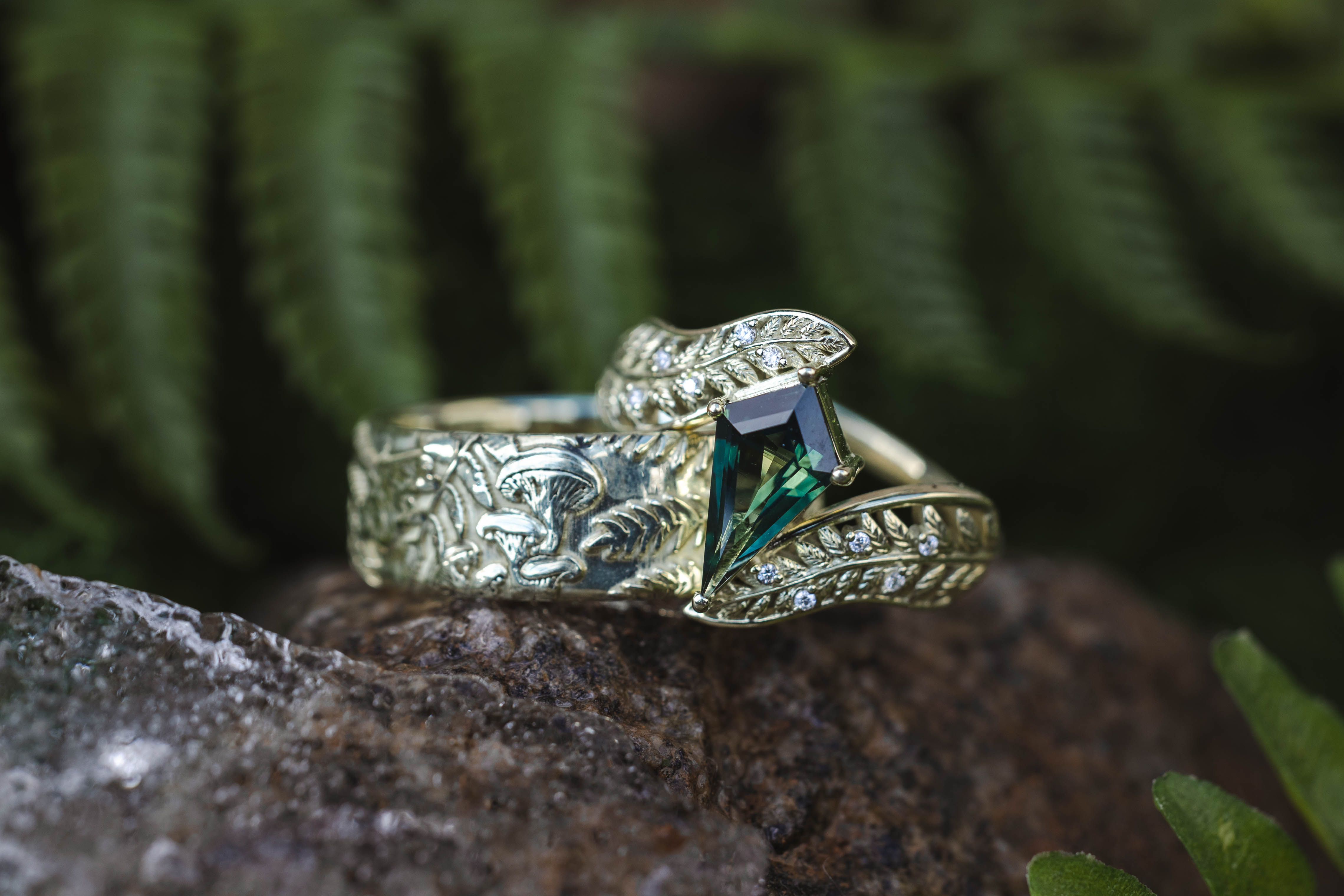
Few gemstone cuts carry as much romance and history as the marquise. Elegant, elongated, and unmistakably regal, the marquise cut has captivated royalty, designers, and modern couples for centuries.
Today, marquise engagement rings are experiencing a renaissance—especially among those drawn to antique-inspired design, bold silhouettes, and distinctive shapes. To understand why this cut feels so timeless, we have to start at the beginning.
A Royal Origin: The Birth of the Marquise Cut
The marquise cut dates back to 18th-century France, during the reign of King Louis XV. According to legend, the king commissioned a diamond cut that would resemble the lips of his mistress, the Marquise de Pompadour.
The result was a long, tapered shape with pointed ends—graceful, flattering, and unlike any cut before it. Named in her honor, the marquise cut quickly became associated with luxury, romance, and aristocratic taste.
From its earliest days, the marquise was designed to be admired.

Why the Marquise Shape Was Revolutionary
At the time of its creation, most gemstones were cut into simple, symmetrical forms. The marquise cut broke tradition by embracing movement and elongation.
Its shape offered several advantages:
-
It appeared larger than other cuts of the same carat weight
-
It created an elegant, lengthening effect on the hand
-
It maximized visual presence without added bulk
This made the marquise cut especially popular among European nobility and, later, during periods of artistic expression and ornamentation.
The Marquise Cut Through the Centuries
18th–19th Century: Aristocratic Elegance
During the Georgian and Victorian eras, marquise-cut stones were often set in ornate gold settings with intricate metalwork. Rings emphasized romance, nature motifs, and craftsmanship—values that still resonate today.

Art Deco Era: Bold Geometry
The marquise saw renewed popularity in the 1920s and 1930s, when Art Deco design favored elongated shapes and strong symmetry. Set in clean lines and dramatic layouts, marquise stones became a symbol of modernity and glamour.

Mid-Century to Modern Day
In the 1960s and 70s, the marquise cut surged again, embraced for its dramatic flair and statement presence. Today, it’s being rediscovered by couples who want something distinctive, romantic, and steeped in history.

What Defines a Marquise Cut?
The marquise cut is characterized by:
This shape allows for incredible versatility in design. It can feel delicate or bold, vintage or modern, depending on how it’s set.

Modern Marquise Engagement Rings: Old Soul, New Energy
In today’s engagement ring landscape, the marquise cut is no longer tied to one era or aesthetic. Modern designers are reimagining it with sculptural bands, bezel settings, and nature-inspired forms.
At Staghead Designs, marquise stones pair beautifully with:


The result is a ring that honors history while feeling completely current.
Why Choose a Marquise Engagement Ring?
Couples are drawn to marquise cuts for many reasons:
-
They stand out from traditional round or oval cuts
-
They offer a flattering, elongated look
-
They carry rich romantic and historical meaning
-
They balance elegance with bold individuality
For those who want a ring that feels expressive, intentional, and slightly unconventional, the marquise is a perfect choice.
Designing a Marquise Ring with Staghead Designs


Every marquise-cut engagement ring at Staghead Designs is handcrafted with intention. Whether your style leans vintage, sculptural, or nature-inspired, the marquise cut offers endless creative possibility.
From bold gold bands to subtle organic detailing, we design marquise rings that feel powerful and personal.
Ready to design your own marquise engagement ring?
Let’s create something unforgettable.